
Healing Herbs of Early Spring: 5 Wild Medicinals to Forage Now
The first warm days of spring bring more than birdsong and gentle breezes – they usher in a green pharmacy of medicinal plants, quietly emerging in yards, parks, and woodland edges. I’ve always felt a special connection to this transitional season when the earth awakens and offers her first healing gifts.
As someone who once couldn’t tell dandelion from burdock, I understand the overwhelming feeling of beginning your foraging journey. That’s why I’m sharing my personal experiences with five exceptional early spring medicinal plants that have transformed my approach to wellness. Each of these green allies appears early in the growing season, offering unique healing properties right when our bodies need them most after winter’s depletion. The best part is that they are free for the taking, and in some cases, your native plants will thank you.
Early Spring Foraging: Nature’s First Medicine Cabinet
There’s something deeply satisfying about spotting the first dandelion of the season or discovering a patch of vibrant violets. Beyond the joy of connection with nature, these early spring medicinal plants offer remarkable health benefits that align perfectly with our body’s seasonal needs. It reminds me of the rebirth that is happening in the world around us and within.
When I first began learning about plant medicine, I was amazed to discover that many plants I had dismissed as “weeds” were actually powerful healers with centuries of traditional use. These early spring medicinal plants are nature’s way of providing exactly what we need after winter’s heavy foods and indoor living: gentle detoxification, nutritional support, and immune-boosting properties.
Let’s explore five incredible medicinal plants that emerge in early spring, each with unique benefits and applications for holistic wellness. Once you know what to look for, they are easy to identify and generally safe for most.
Dandelion: The Sunshine Detoxifier
Dandelion (Taraxacum officinale) is perhaps the most recognizable spring medicinal plant, and for good reason. This sunshine-yellow flower offers tremendous healing properties throughout its entire lifecycle and in every part of the plant.
When I first learned about dandelion’s benefits, I couldn’t believe I’d spent years trying to banish it from my lawn! Now, I eagerly await its appearance, knowing it brings powerful liver support exactly when my body needs spring cleansing.
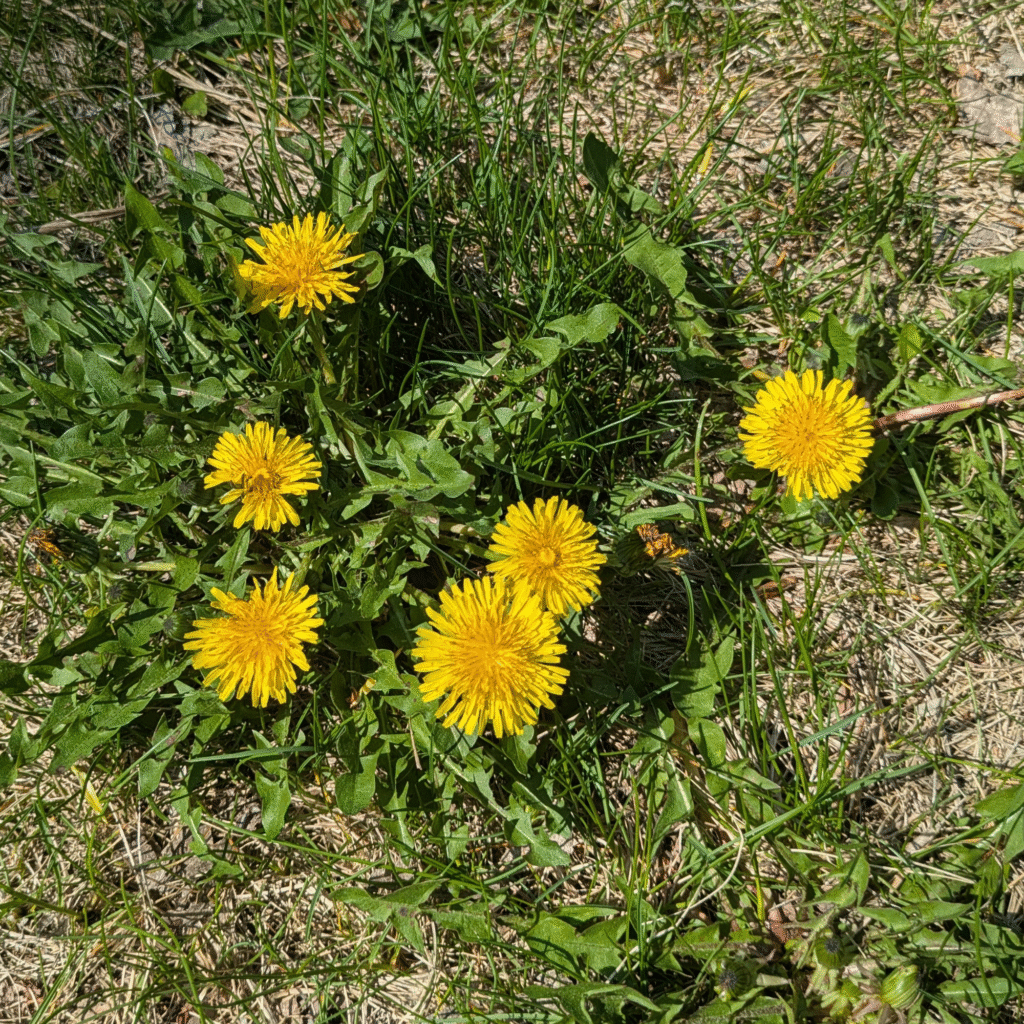
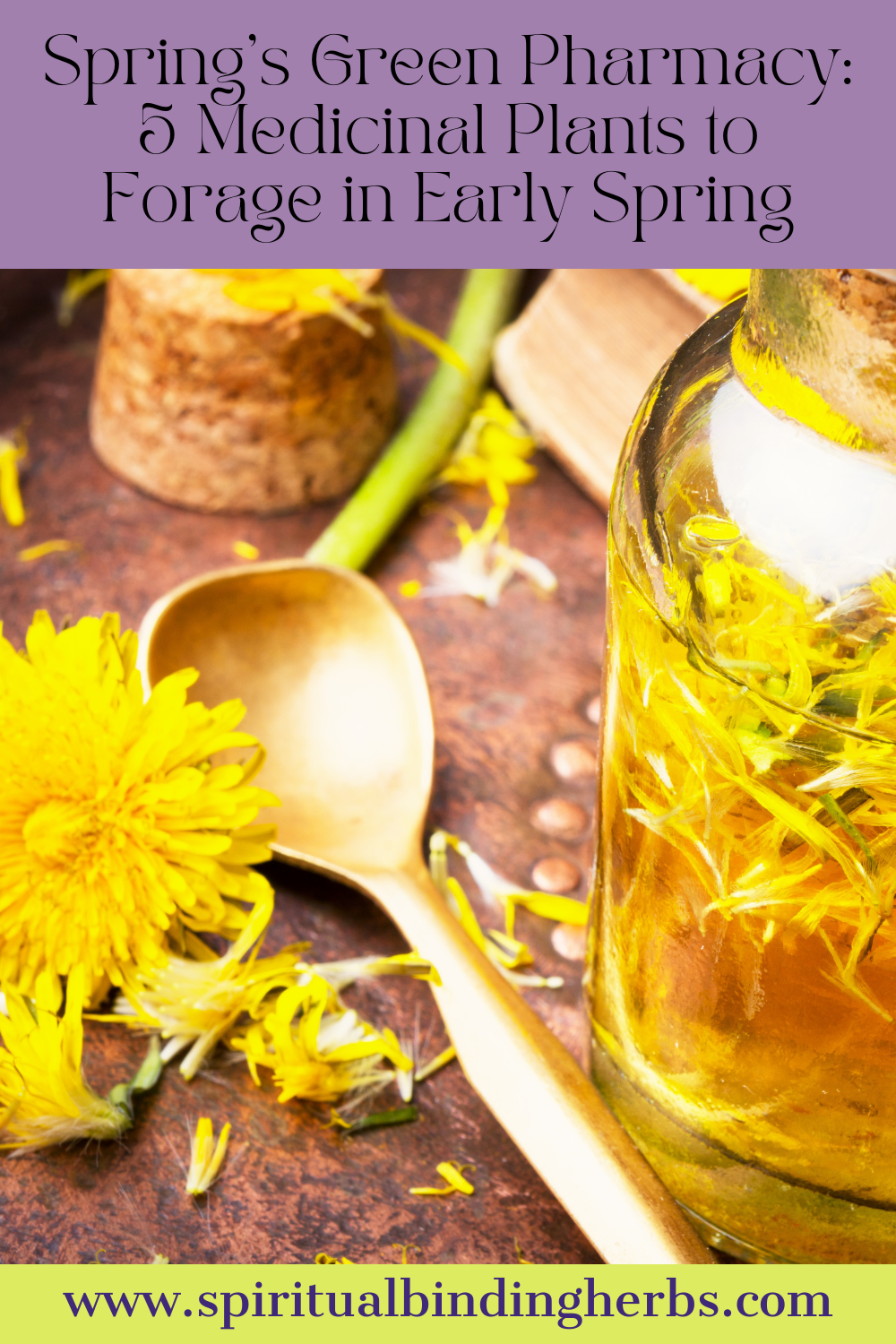
Identification: Dandelions form a basal rosette of toothed leaves (the name comes from “dent de lion” or lion’s teeth in French). The single hollow stem produces one bright yellow flower that eventually transforms into the familiar white “wish” seedhead. The entire plant contains a milky white sap when broken.
Medicinal Benefits:
- Supports liver function and detoxification
- Acts as a gentle diuretic without depleting potassium
- Provides exceptional nutritional value (rich in vitamins A, C, K, and minerals)
- Helps regulate blood sugar levels
- Supports digestive health
How I Use It: My favorite way to incorporate dandelion is by adding young leaves to spring salads for a nutritious bitter element. I also brew dandelion root tea for liver support and make dandelion flower tincture to help bring in all of the spiritual connection to the sun. The roots can be roasted and ground as a coffee substitute that supports rather than stresses the adrenals.
Chickweed: The Gentle Healer
Chickweed (Stellaria media) holds a special place in my heart as one of the first plants I learned to easily (& correctly) identify. This delicate, star-flowered plant creeps low to the ground and appears early in spring, often forming lush green carpets in moist, partially shaded areas.
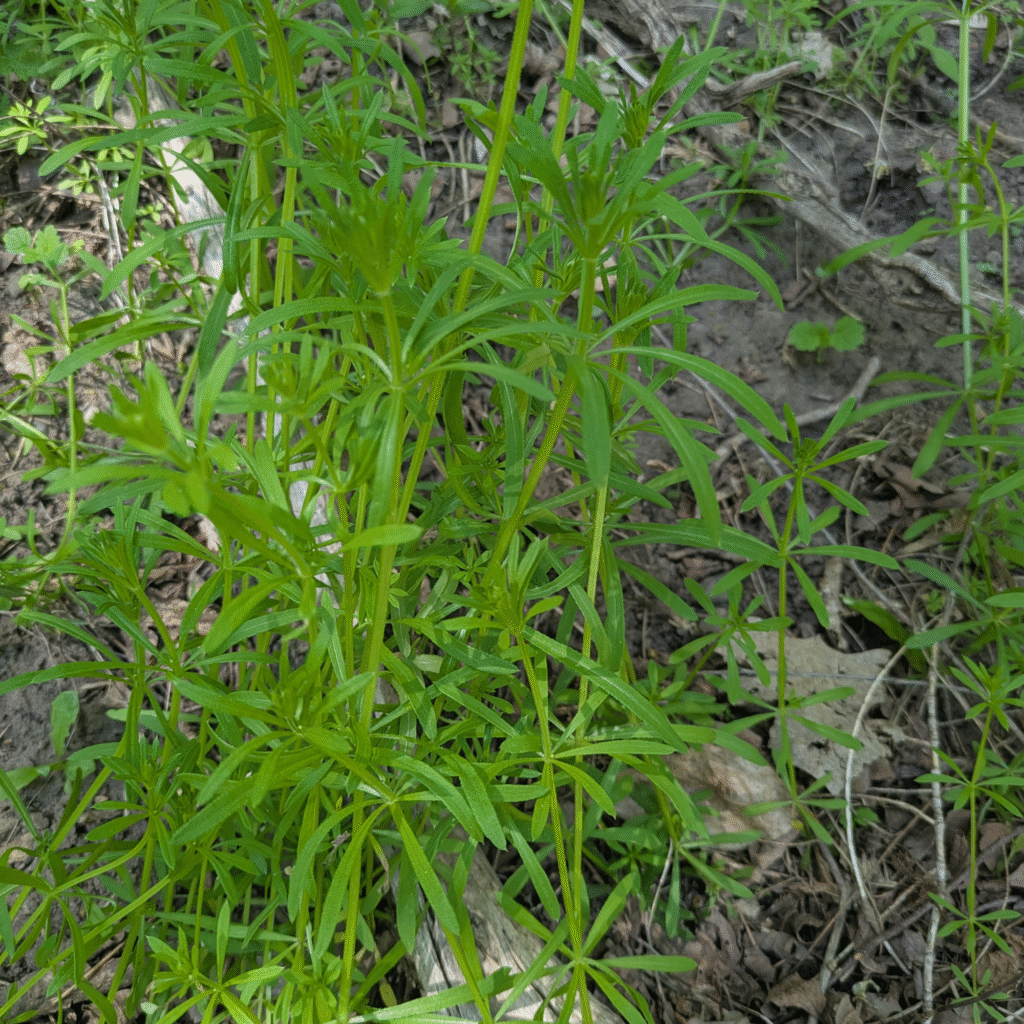
Identification: Look for small, oval opposite leaves and tiny white flowers with five deeply notched petals (appearing as ten petals). Chickweed has a unique stem feature – a line of fine hairs that alternates sides between leaf nodes. When broken, the stems are stretchy rather than snapping cleanly. One easy way to know if you have found chickweed is by its sticky nature. If it sticks to your clothes easily then most likely you have chickweed!
Medicinal Benefits:
- Provides cooling, soothing relief for skin irritations
- Offers gentle detoxification support
- Contains saponins that support lymphatic movement
- Provides valuable minerals including iron and zinc
- Acts as a mild diuretic to reduce water retention
How I Use It: Chickweed makes a delightful addition to spring salads with its mild, slightly sweet flavor. Another easy way to incorporate into your medicinal cabinet is to create a healing chickweed salve for skin irritations and minor wounds. For internal use, I enjoy Chickweed as a fresh plant tincture or in smoothies for gentle detoxification support. If smoothies aren’t your thing juice with your other green juice blends.
Spring Tonics: Three More Medicinal Plants to Discover
Beyond dandelion and chickweed, early spring offers several other remarkable medicinal plants. Each brings unique healing properties to support our transition from winter to warmer seasons.
Violet: The Lymphatic Supporter
I’ll never forget the first time I discovered a patch of sweet violets (Viola spp.) in early spring. Their heart-shaped leaves and delicate purple flowers seemed to appear overnight, bringing a touch of magic to the awakening landscape.
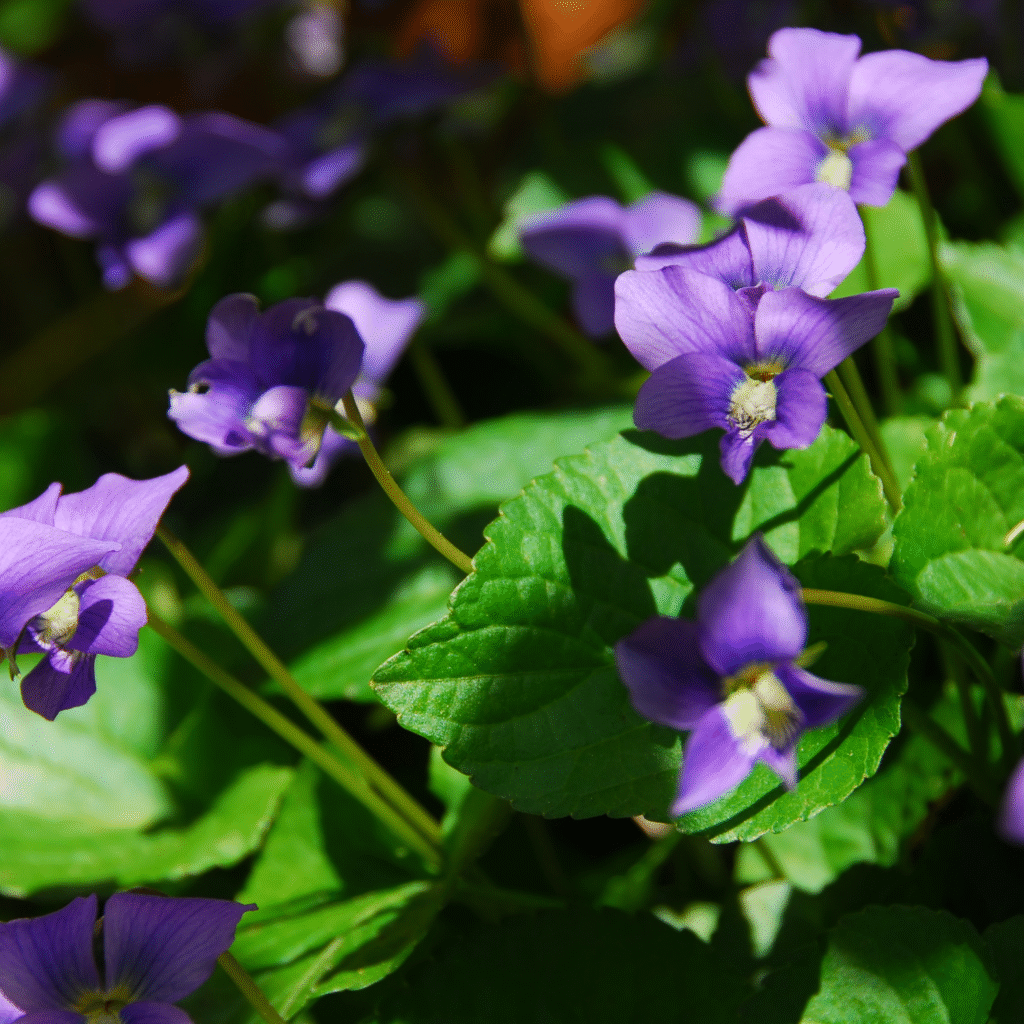
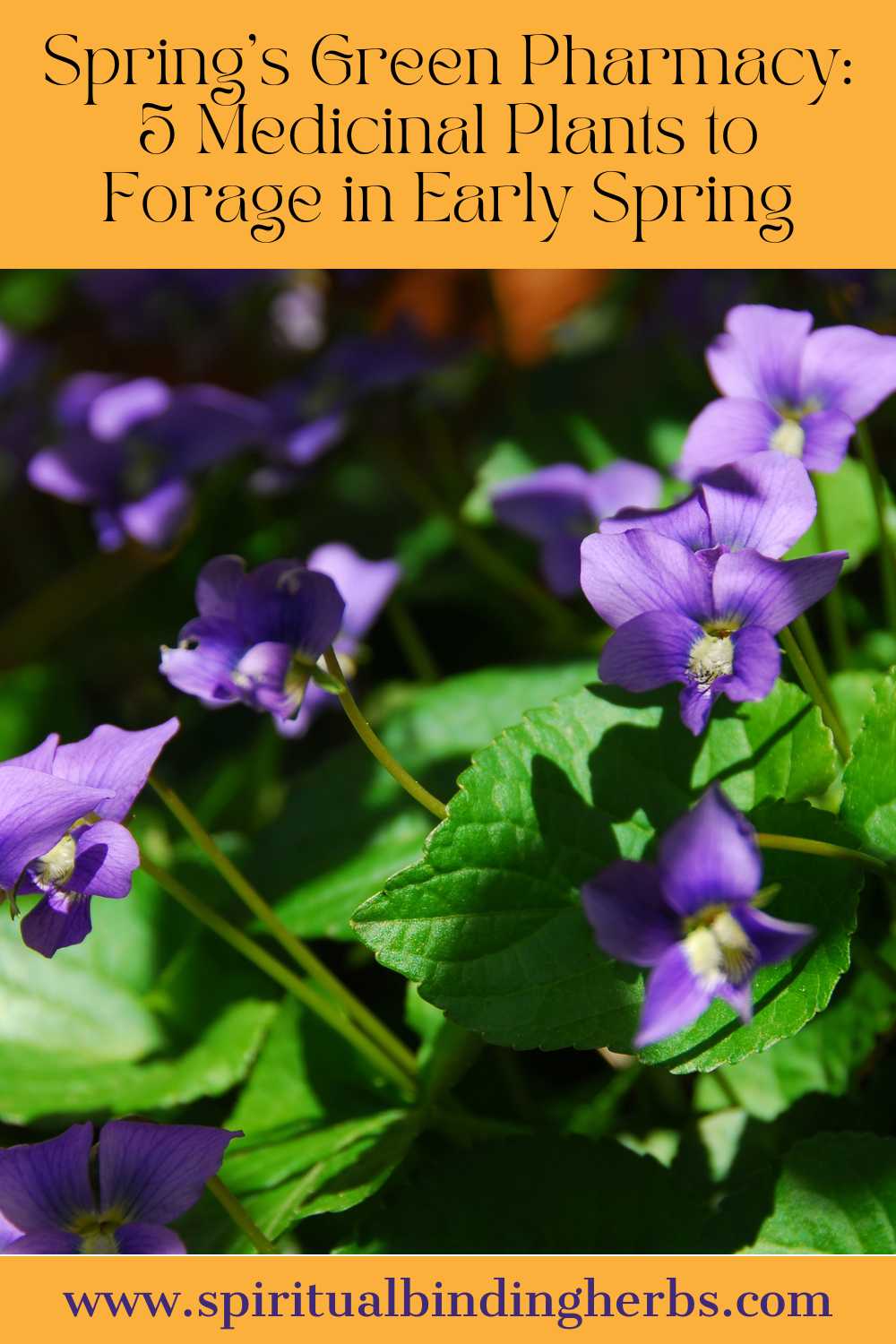
Identification: Violets have distinct heart-shaped leaves with scalloped edges that emerge from the base of the plant (no stem). The five-petaled flowers may be blue, purple, or white depending on the species, with the sweet violet (Viola odorata) being the most commonly used medicinally.
Medicinal Benefits:
- Supports lymphatic movement and drainage
- Contains mucilage that soothes respiratory passages
- Offers anti-inflammatory properties for internal and external use
- Provides immune-modulating effects
- Contains vitamin C and antioxidants
How I Use It: Violet leaves and flowers make a nutritious addition to spring salads. I also create violet glycerite to support lymphatic health and capture these ephemeral blooms in violet-infused honey. For dry winter skin, violet leaf-infused oil makes a wonderful moisturizer.
Garlic Mustard: The Nutritional Powerhouse
When I first encountered garlic mustard (Alliaria petiolata), I was torn between appreciation for its medicinal properties and concern about its invasive nature. This biennial plant was brought to North America by European settlers for its culinary and medicinal uses but has since become aggressively invasive in many woodland areas.
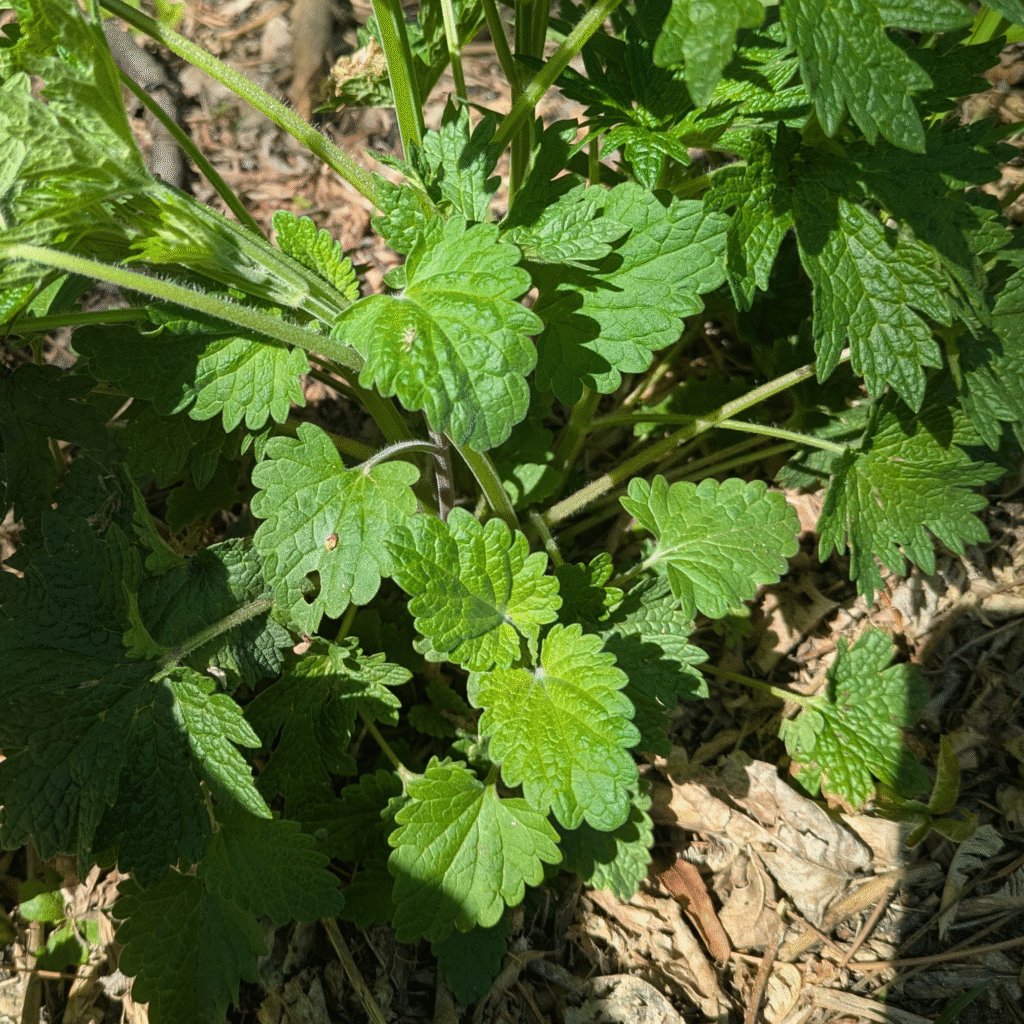
Identification: First-year garlic mustard forms a basal rosette of kidney-shaped leaves with scalloped edges. Second-year plants grow tall (up to 3 feet) with triangular or heart-shaped toothed leaves and small white four-petaled flowers. All parts emit a distinct garlic odor when crushed.
Medicinal Benefits:
- Offers antibacterial and antimicrobial properties
- Contains significant amounts of vitamins A and C
- Provides cardiovascular support through sulfur compounds
- Supports respiratory health
- Acts as a mild diaphoretic (induces sweating)
How I Use It: Because garlic mustard is invasive, I harvest it with enthusiasm, knowing I’m helping native plants while gaining medicinal benefits. I mainly use the young leaves in pestos, stir-fries, and as a garlic substitute in recipes. The roots can be grated and used like horseradish for their spicy kick and decongestant properties.
Important notes: If you plan to forage, remove the whole plant, roots, and all to help stop the spreading. Your native plants will thank you! Do not add to any compost, but instead dispose of it in the trash, wrapped in a bag. Also, if using older plants make sure to cook well. The older pants contain higher amounts of cyanide, but cooking removes this.
Burdock: The Deep Cleanser
Burdock (Arctium lappa) has been my loyal companion through many healing journeys. This biennial plant with its massive leaves and notorious burrs offers profound detoxification support, especially valuable after winter’s stagnation. Although it is easily found out in nature I grow this hardy plant every year in my garden, every yea I am still amazed at its size and beauty.
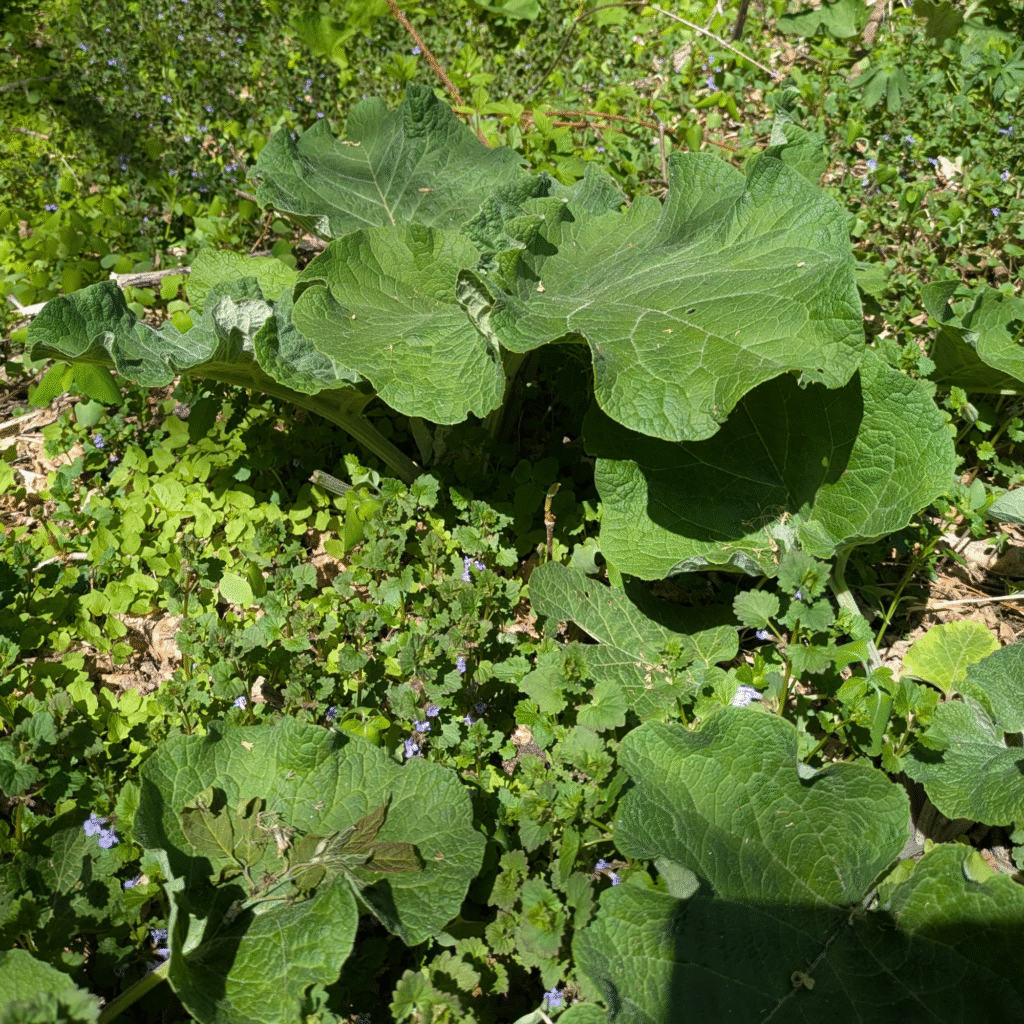
Identification: First-year burdock forms a rosette of large, wavy-edged leaves that can grow quite large (up to 2 feet long). The leaves are green on top and whitish underneath. Second-year plants grow tall with purple thistle-like flowers that develop into the familiar sticky burrs. The deep taproot is the most prized medicinal part. Fun fact – the concept around Velcro came from the burrs of the Burdock plant.
Medicinal Benefits:
- Supports deep detoxification through blood and lymphatic cleansing
- Provides inulin, a prebiotic fiber that feeds beneficial gut bacteria
- Offers potent anti-inflammatory properties
- Contains antioxidants that protect cells from damage
- Supports healthy skin and has traditionally been used for skin conditions
How I Use It: In early spring, I dig first-year burdock roots before they put energy into second-year growth. The roots can be prepared as a vegetable (similar to carrots but with an earthy flavor), used in traditional dishes like kinpira gobo, or dried for medicinal teas. The young leaves can also be used in spring tonics, though they require blanching to remove bitterness.
Creating Your Spring Medicine Cabinet
My journey with these early spring medicinal plants has taught me that you don’t need exotic ingredients or complicated formulations to support wellness. Nature provides exactly what we need, right when we need it.
If you’re new to plant medicine, I recommend starting with just one or two plants that call to you. Nutritive plants like Chickweed, Dandelion and Voilet are generally safe for everyone and an easy area to start with. Spend time getting to know them intimately – observe how they grow, taste them prepared in different ways, and notice how your body responds to their medicine. These plants are great to start with and an easy way to grow your medicinal cabinet on a budget.
Here are some simple preparations to begin your spring wellness journey:
- Spring Tonic Salad: Combine young dandelion leaves, chickweed, violet leaves and flowers, and small amounts of garlic mustard for a nutrient-dense salad that supports gentle detoxification.
- Burdock-Dandelion Root Tea: Simmer chopped roots of both plants for 20 minutes, then strain. This traditional combination supports liver and kidney function.
- Violet Glycerite: Infuse fresh violet flowers and leaves in vegetable glycerin for a sweet-tasting lymphatic support tonic.
- Chickweed Salve: Infuse dried chickweed in olive oil, then combine with beeswax for a healing skin salve.
- Garlic Mustard Pesto: Blend young garlic mustard leaves with olive oil, nuts, and parmesan for a delicious pesto that supports respiratory health.
Remember, the journey into plant medicine is deeply personal. What works wonderfully for one person may not resonate with another. Listen to your body’s wisdom and approach these plants with respect and gratitude.
If you want to expand beyond these 5 plants check out Chestnut School of Herbal Medicine blog article on The 10 Best Wild Foods and Medicinals for Beginning Foragers and Wildcrafters.
Responsible Foraging Practices
As I’ve deepened my relationship with medicinal plants, I’ve developed a profound appreciation for ethical foraging practices. Here are some guidelines I follow:
- Proper Identification: Never harvest a plant unless you’re 100% certain of its identity. Use multiple field guides and consider going on walks with experienced foragers.
- Sustainable Harvesting: Follow the rule of thirds – take no more than one-third of a plant population, leave one-third for wildlife, and one-third for the plant to regenerate.
- Respect Private Property: Always get permission before harvesting on private land.
- Avoid Contaminated Areas: Don’t harvest plants near roadways, industrial areas, or places that may have been sprayed with chemicals.
- Express Gratitude: Acknowledge the gift these plants offer us by offering something in return – whether it’s clearing invasive species, spreading seeds, or simply sharing knowledge about their importance.
With these five early spring medicinal plants in your wellness toolkit, you’re equipped to support your body’s natural healing processes as we transition into the growing season. May your journey with plant medicine be filled with joy, discovery, and deep healing.
What spring medicinal plants have you discovered in your area? I’d love to hear about your experiences in the comments below!
Continued reading
Learn How To Support The Liver: Herbal Detoxification
If you are just starting your herbal journey, here are the Top Ten Medicinal Herbs for Your Garden: A Beginner’s Guide I recommend.
There is a plethora of books out there that can help you along your herbal journey, but it can be overwhelming. So, here are the Top 5 Herbal Books for Beginners.
Wishing you love, light and inner peace babes ✌🌈✨💜
- Spiritual Cleansing with Plants: A Complete Guide
- Calendula Magical Properties: Unlocking the Ancient Secrets of the Golden Healer
- Healing Herbs of Early Spring: 5 Wild Medicinals to Forage Now
- Embracing the Blood Moon Magic: A Beginner’s Guide to Lunar Eclipses
- Dancing with the Moon: Harnessing Lunar Energy for Your Wellness Journey


You May Also Like
Spiritual Cleansing with Plants: A Complete Guide